WIFI
Navigate to ‘System’->’Networking’->’WIFI’ to access the Wifi settings.
On the WiFi settings page, users have the option to:
Set up MaestroDMX to create its own network that your device (computer, tablet, etc) can connect to. This is the default behavior. Here you can also set SSID (network name) and password.
Connect MaestroDMX to an existing local wireless network (such as your home wifi). This allows you to connect to MaestroDMX as long as your device is connected to your local network.
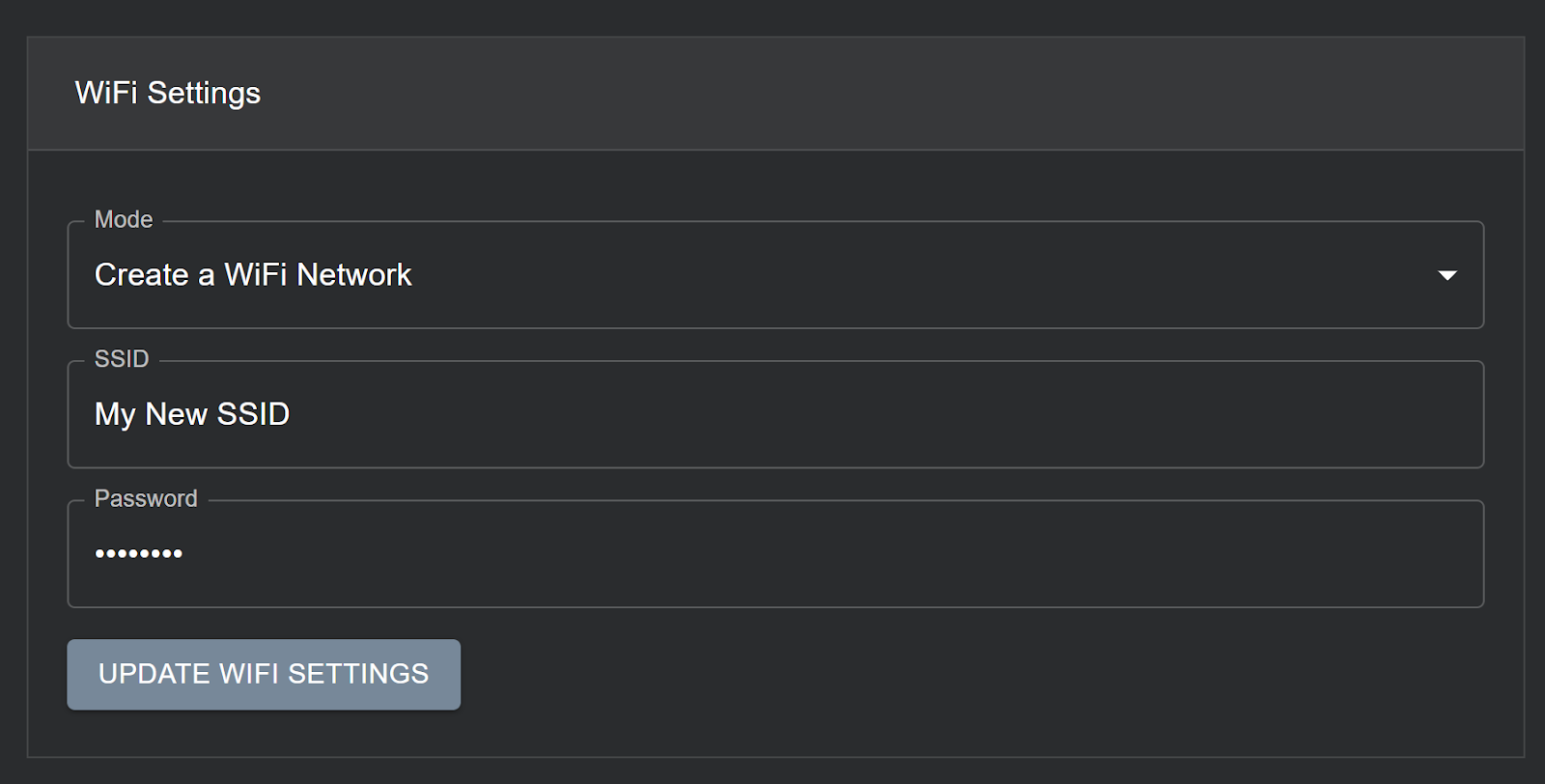
WiFi Settings
Within the WiFi Settings, users have the option to switch between two distinct modes: “Create a WiFi Network” and “Connect to an Existing WiFi Network”, such as your local router.
Note: Please be aware that modifying WiFi settings may require a few minutes, during which you may experience a temporary disconnection from the web app.
Create a WiFi Network
By default, Maestro serves up its own network with a unique SSID labeled as “Maestro-XXXXXX.” In this mode, users have the flexibility to personalize the SSID and modify the password for the Maestro network. To achieve this:
Switch into “Create a WiFi Network” mode
Input a preferred SSID of your choice
Specify a password that grants access to your Maestro network
Click “Update WiFi Settings” to apply the changes
Connect your device to the new MaestroDMX WiFi network
Close the MaestroDMX app and re-open it in a new browser window
Warning: In the event of a forgotten password, the only means of connecting to the Maestro will be through an Ethernet connection or by installing a network reset package available on the Software Updates page. This will reset the password to 'mymaestro'.
Note: Users have the flexibility to modify SSIDs and passwords as often as needed.
Connect to an Existing WiFi Network
This mode provides a straightforward connection between MaestroDMX and personal devices by connecting Maestro to an existing local network that your device is also connected to, such as your home wifi network for example. To achieve this:
Switch into 'Connect to an Existing WiFi Network' mode
Enter the SSID of the desired network
Input the network password
Click 'Update WiFi Settings' to finalize the configuration
Connect your device to the local WiFi network
Close the MaestroDMX web app and re-open it in a new browser window

Warning: In the event of a forgotten password, the only means of connecting to the Maestro will be through an Ethernet connection or by installing a network reset package available on the Software Updates page. This will reset the password to 'mymaestro'.
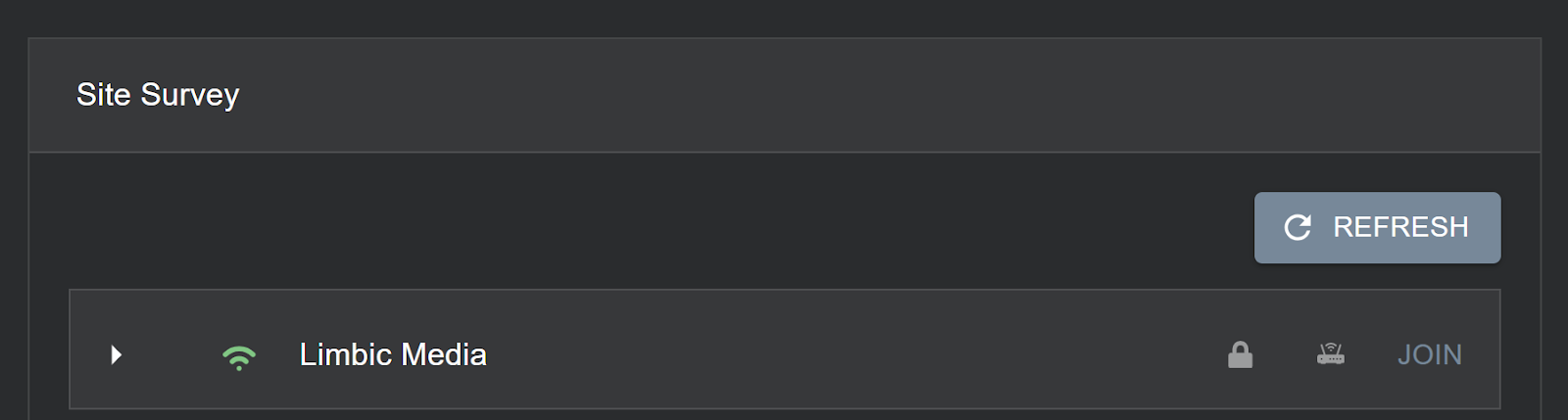
Site Survey
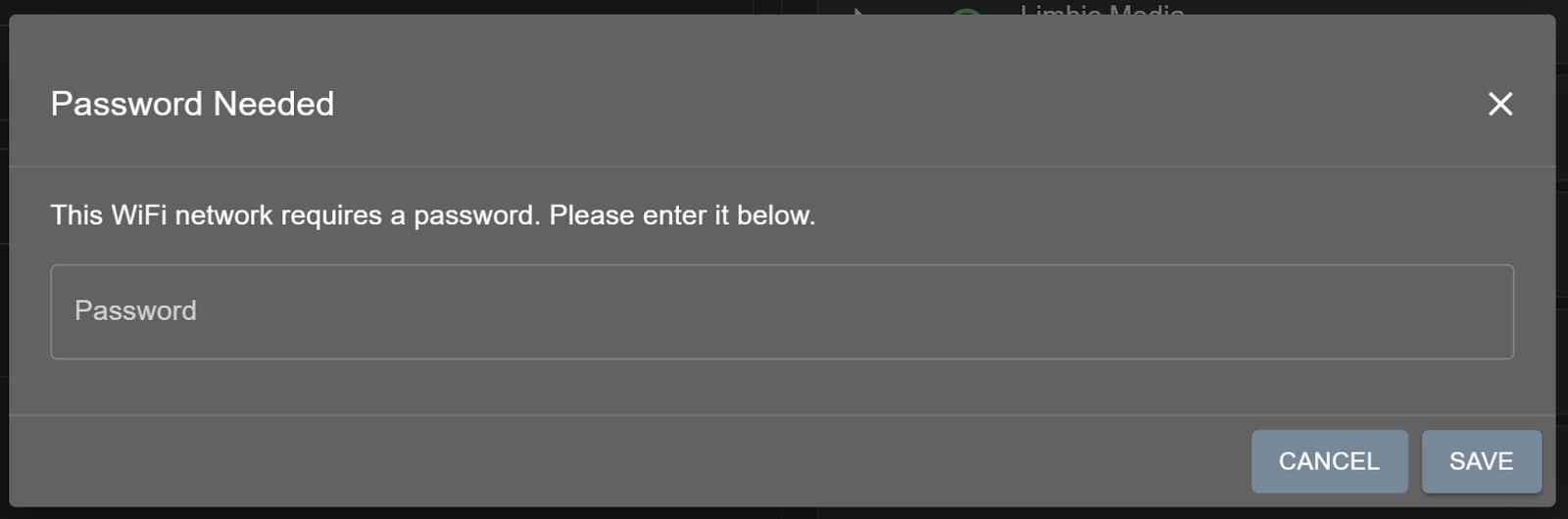
The site survey provides a list of networks in the vicinity, along with pertinent details and signal strength information. It also offers an alternative method to connect Maestro to an existing network. Simply choose the “Connect to an Existing Network” mode, then click “Join” next to the desired network.
NOTE: Be sure to close the MaestroDMX app and re-open it in a new browser window.
Setting Static vs DHCP
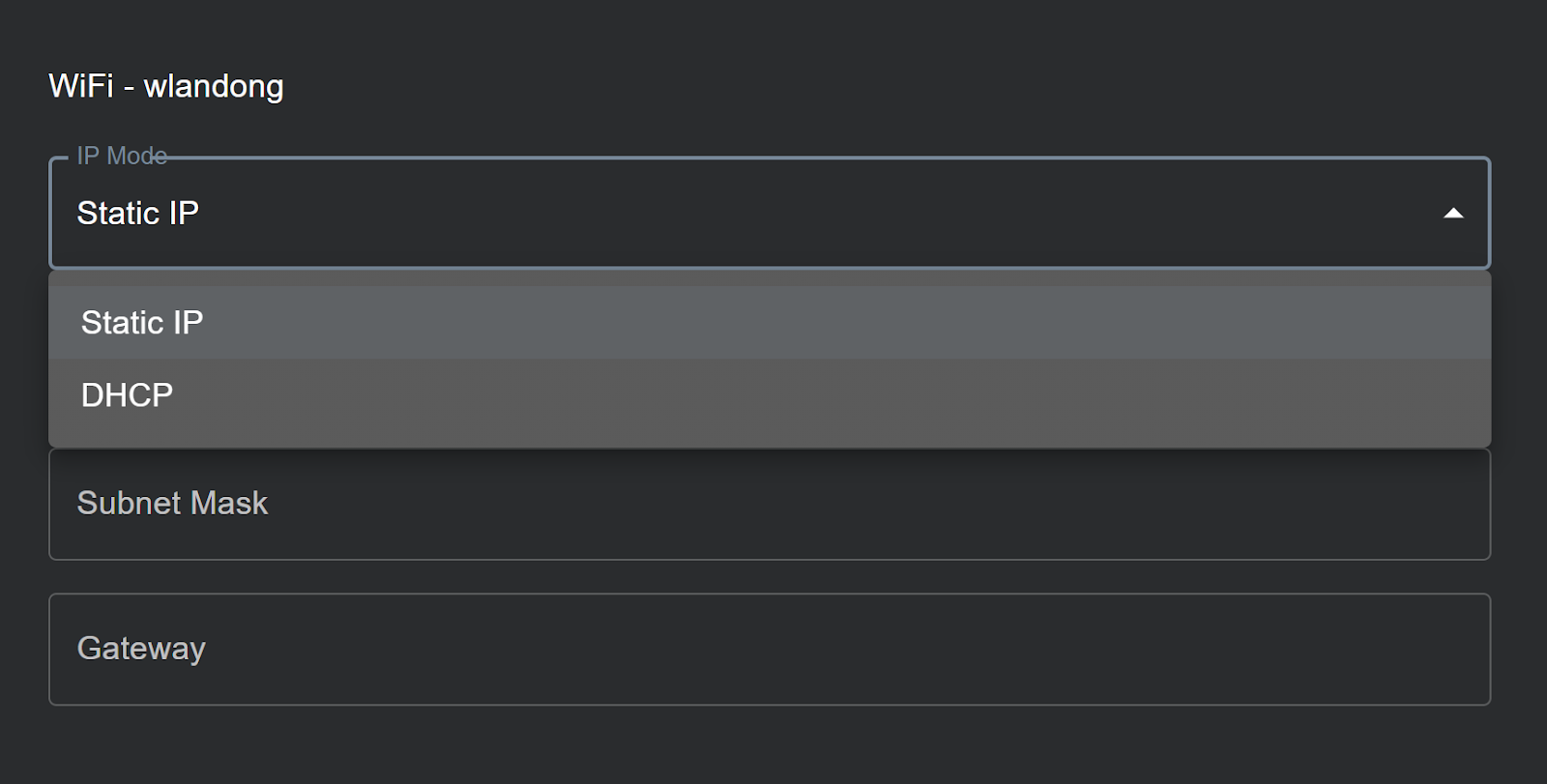
For wireless connections, MaestroDMX offers two IP modes: Static IP and DHCP. Before configuring, ensure you switch to "Connect to an Existing Network" mode in the Wi-Fi settings page.
NOTE: The WiFi interface will only show up if MaestroDMX is connected to a local network
DHCP Mode:
In DHCP mode, the Maestro is automatically assigned an IP address, subnet mask, and gateway.
Devices on the same network as the Maestro can connect to the web app by entering the assigned IP address into the browser.
Static IP Mode:
Switch to Static IP mode.
Enter a static IP address within a valid range of your network, ensuring it doesn't conflict with other devices.
Enter a subnet mask associated with your network.
Provide the gateway IP of your router.
Devices on the same network as the Maestro can connect to the web app by typing the manually set IP address into the browser.
Note: In addition to configured IP addresses, the web app can always be accessed by typing http://yourHostname.local into the browser.
Hostname
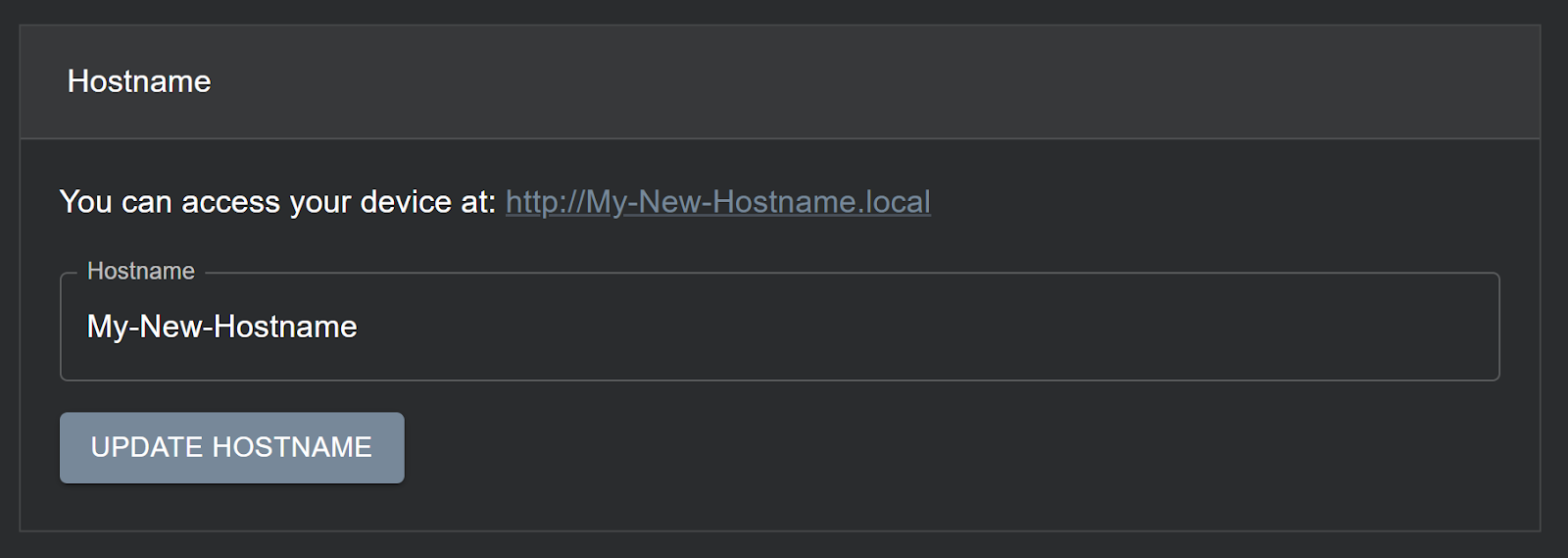
The hostname serves as Maestro's name and is the identifier in the URL used to access the web app. To update the hostname:
Enter a new hostname.
Click 'Update Hostname' to apply the changes.
Note: Please be aware that modifying Network and Hostname settings may require a few minutes, during which you may experience a temporary disconnection from the web app.
Hardwire Connections
In MaestroDMX navigate to ‘System’->’Networking’->’LAN’ to access the LAN settings.
The Local Area Network (LAN)Network page allows users to manage both wireless and hardwired network settings and offers the flexibility to customize the Maestro's hostname.
Note: Please be aware that modifying Network and Hostname settings may require a few minutes, during which you may experience a temporary disconnection from the web app.
Wired Ethernet
The Maestro offers two IP modes for Ethernet connections: Static IP and DHCP.
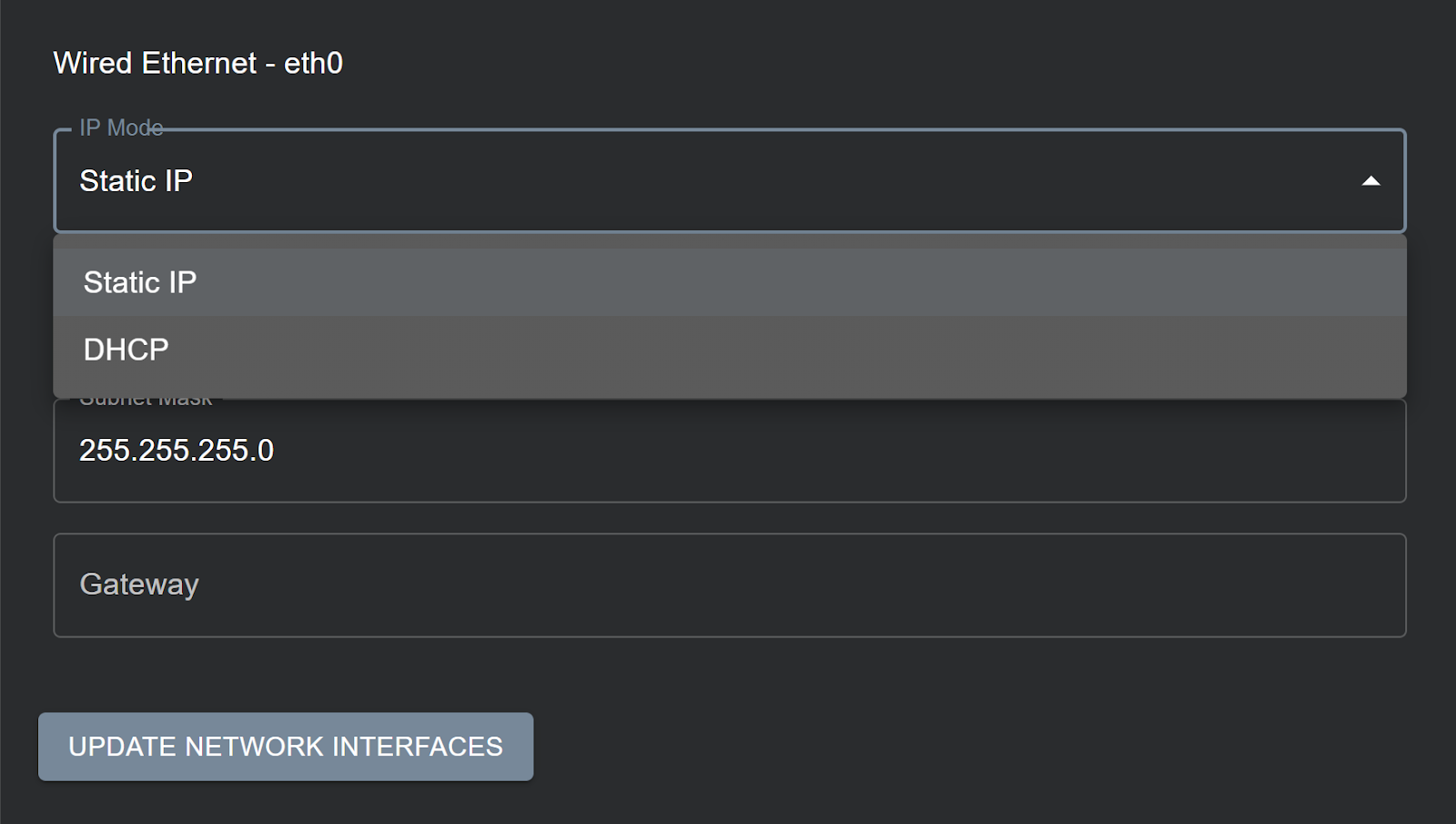
DHCP Mode - Best for using routers
Connect an Ethernet cable from the Maestro to a router.
Switch the IP Mode to DHCP.
Click "Update Network Interfaces."
In DHCP mode, the IP address, subnet mask, and gateway will be automatically assigned. You can access the Maestro web app by entering the generated IP address into your browser. Ensure your device is either wirelessly connected or hardwired to the same network the Maestro is connected to.
Static IP Mode - Best for direct connection to Personal Device such as a laptop
Switch to Static IP mode.
Enter an available IP address.
Click "Update Network Interfaces."
In Static IP mode, users can manually assign an IP address to the Maestro. By default, the Maestro is set to 10.0.0.200. Users can change the IP address to any available 10.0.0.XXX IP, where XXX can be any value up to 255. Note: Some IP addresses may already be reserved for other devices.
When in Static IP mode, connect to the Maestro by attaching an Ethernet cable from the Maestro to a personal device. Ensure you have properly configured the ethernet settings on your device before attempting to connect to the Maestro's web app using your browser.
A hardwire connection can be established via ethernet by entering the following settings into your computer or smart devices LAN port:
IPv4 Manual Connection
IP: 10.0.0.XX (XX can be anything EXCEPT .200 and .1, for example, 10.0.0.61 is fine)
Subnet Mask: 255.255.255.0
Note: the process to do this will differ depending on the operating system type and version. Please consult your operating system’s relevant documentation.
Warning: Please note that unexpected behavior may occur if both WiFi and Ethernet are configured with the same subnet ranges . For example both WiFi and Ethernet cannot both have a 10.0.0.XXX IP address. If your wifi network uses 10.0.0.x range, select something different for your ethernet range.
Access the web app by typing your chosen IP address into the browser.
Configure Ethernet on iPad
https://www.apple.com/shop/ipad/accessories/charging-essentials?f=ethernet&fh=4588%2B303f
Please refer to Apple documentation for a list of supported ethernet adapters that work with iPad.
Once the iPad adapter is connected and the Ethernet cable is plugged into Maestro, follow the steps below on your iPad:
- From the Home Screen, you can open the iOS Settings application.
- In Settings, select Ethernet.
- Select the Adapter to view the settings.
- To enter a Static IP Address, select Configure IP.
- Choose the Manual option.
- Enter the following IP address and Subnet mask.
IP Address - 10.0.0.51
Subnet Mask - 255.255.255.0 - Select Save in the upper right to go back to the previous screen.
- Disable WiFi to ensure the device is only using the Ethernet connection.
Was this article helpful?
That’s Great!
Thank you for your feedback
Sorry! We couldn't be helpful
Thank you for your feedback
Feedback sent
We appreciate your effort and will try to fix the article